South Korea rewards travellers who look beyond the obvious: Seoul is a popular destination for a reason, but to visit Jeju is to discover a completely different side of this remarkable country.
Lying in the Korea Strait 80 kilometres south of the mainland, Jeju is South Korea’s largest island and most treasured natural escape. Its diverse volcanic landscape boasts UNESCO-recognised lava tubes, white sand beaches, densely packed gotjawal forests and dramatic coastal cliffs, while the unhurried pace of life invites you to slow down and take it all in. A trip that combines Seoul and Jeju encompasses two of the most interesting places to visit in South Korea and ensures that you’ll see the multifaceted nature of the nation.
Why Visit Jeju Island: Nature, Culture and One-of-a-kind Atmosphere
Jeju’s appeal begins with its geology. The shield volcano Mount Hallasan is South Korea’s highest peak and dominates the centre of the island. Its volcanic activity has left behind a landscape unlike anywhere else in the country.
Beyond its geological drama, Jeju has a distinct cultural identity: the island’s haenyeo traditions are recognised by UNESCO as an Intangible Cultural Heritage of Humanity. These legendary female free-divers have been harvesting seafood from Jeju’s seawaters for centuries and are capable of holding their breath for up to three minutes while diving to depths of 20 metres. We don’t recommend trying to beat their records, as it takes years of practice to perfect, but you’ll certainly enjoy marvelling at their skill!
Finally, alongside the people and the physical surroundings, the mild climate makes Jeju island sightseeing enjoyable in almost every season: from autumn foliage hiking tours, to peaceful winter surroundings with the snow-capped mountain, to picturesque spring floral displays.
Things to Do in Jeju: From Volcanic Trails to Coastal Villages
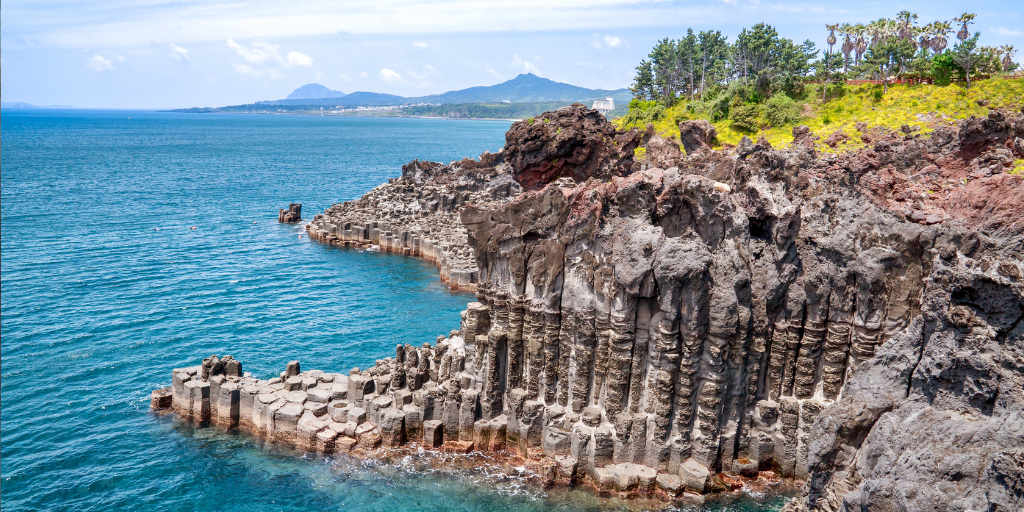
Jeju is one of the best places to visit in Korea outside of Seoul, thanks to the range of activities on offer. For nature lovers, the Hallasan National Park trails offer routes for every level of experience. Plus, the volcanic Daepo Jusangjeolli Cliff on the island’s southern coast is one of the most striking of Jeju island’s attractions. Visit at sunset to see the columns glow deep ochre against the water.
The Olle Trail network offers a self-paced way for outdoor enthusiasts to explore the island. The most scenic of this series of 27 walking routes is Route 7, which combines coastal drama with examples of quiet village life.
Finally, experience the local culture by visiting Seongeup Folk Village. Its traditional hanok houses and historic olle paths and stone walls offer a well-preserved window into Jeju life over the years. Additionally, the Jeju Haenyeo Museum in Gujwa provides further insight into the island’s remarkable diving culture.
Jeju Food: Island Cuisine Worth the Journey
Shaped by the volcanic soil, climate and surrounding sea, the island’s cuisine is one of the most compelling reasons to visit Jeju. Jeju black pork is considered the ‘Wagyu’ of the pork world: this native breed yields rich and crispy meat, and is typically grilled over charcoal. There’s even a food alley in Jeju City named after this famous dish.
For seafood lovers, fishing village restaurants along the coast serve Korea’s answer to sashimi: Jeju hoe, made with fresh local perch and bream. Other local specialities include beltfish, damselfish, abalone and horned conch. For those who enjoy a little spice, the most iconic dish is a chilled soup called mulhoe – seasoned with chili, soybean paste and topped with seaweed. To top it all off, Jeju’s hallabong satsumas are served in many ways, including as a tea, fresh juice, or over shaved ice.
Where to Stay: Ecoland Hotel, Gotjawal Forest
For a stay that places you directly within Jeju’s glorious natural landscape, Ecoland Hotel is the perfect choice. Nestled within the ancient gotjawal forests, this nature-focused property offers a one-of-a-kind experience of the island.
The hotel’s rooms are furnished with specialty mattresses and goose-down bedding to provide a restful retreat after exploring the island. Volcanic rock water flows throughout the property, connecting your whole stay to Jeju’s natural surroundings. Plus, the restaurant overlooks the lake and serves seasonal menus celebrating many of the local flavours mentioned above.
The surrounding Ecoland Theme Park also offers forest trail experiences and a charming narrow-gauge train journey through the woodland. For travellers who value quiet stays immersed in nature, Ecoland Hotel is your perfect Jeju place to stay.
How to Get to Jeju Island and When to Visit
Getting to Jeju island is very straightforward: frequent domestic flights connect Seoul’s Gimpo Airport to Jeju International Airport in approximately one hour. Ferries from Mokpo and other mainland ports also serve the island for those preferring a scenic sea crossing.
When to visit Jeju island depends on your priorities. Spring brings cherry blossoms and brilliant yellow canola flower fields, while autumn offers clear skies and rich foliage displays. Spring and autumn both offer comfortable temperatures, and staying here around the end of the year is most relaxing as there are fewer visitors. Summer is the peak tourist season, and can have much warmer and more humid weather and occasional typhoons. For something slightly different, visiting Jeju in winter can be a truly magical experience: the temperatures are mild by Korean standards and the island’s volcano and peaks offer stunning displays in the snow.
Suggested 5-Day Itinerary: Seoul and Jeju Island
Day 1: Seoul: Begin in Bukchon Hanok Village, where traditional houses nestle between Gyeongbokgung Palace and Changdeokgung Palace. Then spend the afternoon exploring the lesser-visited Ikseon-dong neighbourhood with its restored 1930s alleyways that now house independent tea houses, bookshops and small galleries.
Day 2: Seoul: Dedicate the morning to Gyeongbokgung Palace and the adjacent National Folk Museum before heading to the creative district of Seongsu-dong. Known as the ‘Brooklyn of Seoul’, this trendy neighbourhood is bursting with factories converted into design studios, specialty coffee roasters, plus some of the city’s finest independent restaurants. End the day at Namsan Seoul Tower for panoramic views across the city at dusk.
Day 3: Travel to Jeju: Fly from Gimpo to Jeju International Airport and head straight to the coast. The dramatic Jusangjeolli Cliff columns make a spectacular first impression of the island, and the nearby village of Jungmun offers excellent local seafood restaurants for your first taste of Jeju’s food specialties.
Day 4: Jeju: Spend a full day in the gotjawal forests, walking the ancient lava trails around Ecoland, then visit Manjanggul Lava Tube Cave for an otherworldly underground journey.
Day 5: Jeju: Follow part of Olle Trail Route 7 along the northern coast, stopping at local haenyeo diving spots and roadside stalls selling freshly grilled Jeju black pork and hallabong citrus drinks. End the day back at Ecoland Hotel for a restorative evening of forest stillness.
Your South Korean Adventure Awaits
From Seoul’s electric energy to the volcanic forests and coastal drama of Jeju, South Korea offers a meaningful and varied travel experience. Visit Jeju island once, and you’ll soon find yourself planning to return, possibly for a longer stay to experience some of Korea’s other coastal destinations!